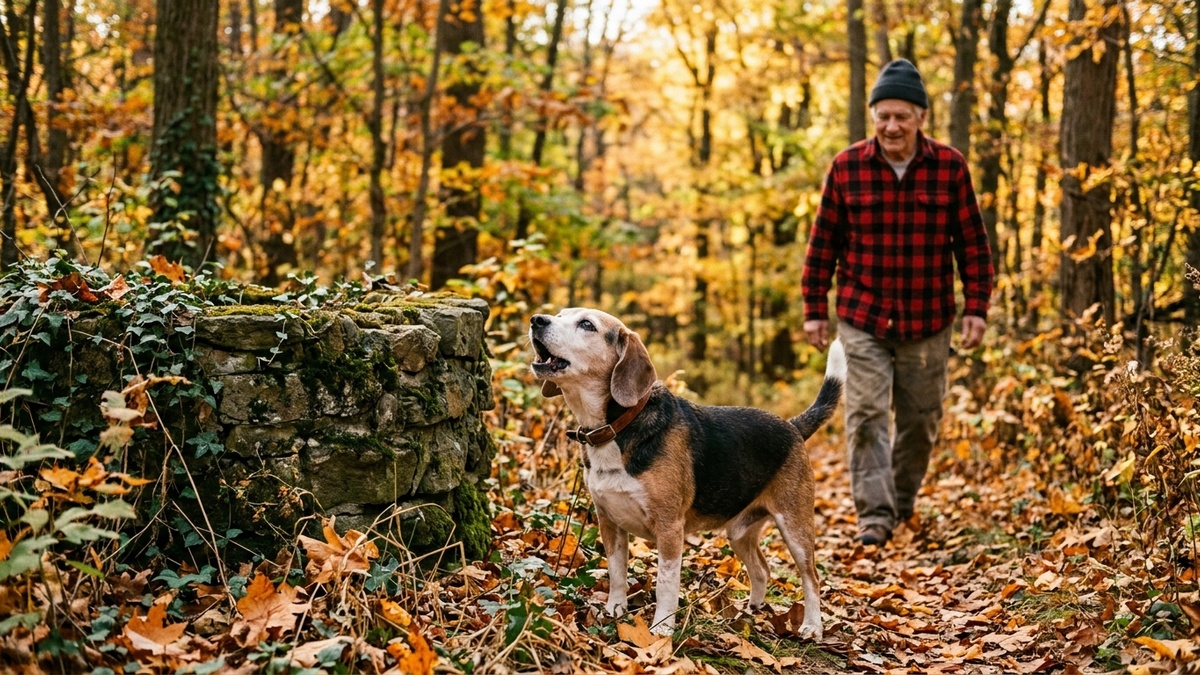
After two years in Army hospitals, Cole Mabry limped into his dead grandfather's barn expecting starved cattle, and found an eighty-one-year-old woman asleep in a lawn chair beside a stack of fresh hay.
He stood in the barn door with his duffel bag on his shoulder and a cane in his left hand and did not know what to say.
The woman opened one eye.
"You're late," she said. "I've been feeding your cows for nineteen months."
Her name was Beulah Ricketts. She lived on the next place over, eight miles down a gravel road in the high desert east of the Cascades, outside a town called Juniper Flat, Oregon. She was small and wiry, with a face like a dried apple and hands as tough as old saddle leather. She wore a man's wool coat and a knit cap pulled down over her ears.
"Your granddad's lawyer called me when he passed," she said, folding up her lawn chair. "Said the grandson was in the service and hurt bad, and the place would go to auction if the cattle died before he got home. I said I'd keep them alive."
"For nineteen months?"
"Cows don't stop eating because you're in the hospital, son."
Cole looked past her into the barn. Hay stacked to the rafters. Salt blocks in the bunks. The old tractor his granddad had loved, oiled and covered with a tarp.
"Why?" he said.
Beulah picked up her chair and walked past him toward her old pickup.
"That's a long story," she said. "Come to supper Sunday, and I'll tell you."
Cole was thirty-one. He had grown up on this ranch in the summers, riding behind his grandfather, Lyle Mabry, on a horse too big for him. He had joined the Army at nineteen. Twelve years and three deployments later, a roadside bomb had broken his left leg in four places and put him in a hospital in Texas and then a rehab center in Washington.
His grandfather had died while he was in the hospital. Cole had not been able to come to the funeral.
He had come home to sell the place. He had a buyer lined up, a company that bought small ranches and leased the land to bigger outfits. The man on the phone had been very polite. He said the company would take the cattle too, as long as they were in decent shape.
Cole had expected to find them dead.
For the first week, he tried to do Beulah's job himself.
He could not do it. Not yet. His leg would not let him climb into the hay barn, and he could not throw a bale from the truck without his cane. The cold of the high desert in December got into the pins and plates in his bones and made them ache all night. He did not sleep much. When he did, he dreamed about things he had not told anyone, not even the doctors.
Beulah came every morning at six anyway. She did not ask how he was. She just drove her pickup into the pasture, and he sat in the passenger seat while she drove and he threw hay off the back, a little at a time, the way she showed him.
"You throw it downhill," she said. "Wind's out of the west. Cows'll come to it."
"My granddad used to say that."
"Your granddad taught me that," Beulah said.
He went to supper on Sunday.
Beulah's house was a little log place with a woodstove and a kitchen table covered with an oilcloth printed with cherries. She made pot roast and biscuits. Afterward, she poured them both coffee and sat down across from him.
"January of 1977," she said. "You ever hear about that winter?"
"No, ma'am."
"Worst I ever saw. Snow and wind for nine days. My husband, Glen, took the truck to check our cattle on the north pasture, and the truck went off the road into a drift six miles from home. Glen tried to walk out."
She looked into her coffee.
"Your granddad found him. Lyle was out on his horse looking for his own cows, and he saw Glen's tracks and followed them. Glen was down in the snow by a fence line, almost gone. Lyle put him across his saddle and walked that horse eight miles through the drifts to get him home. Lyle lost two toes to frostbite. Glen lived thirty-one more years."
Cole sat very still.
"Your granddad never let me thank him," Beulah said. "Not once. Every time I tried, he'd change the subject to the weather. So when that lawyer called me, I figured this was my chance." She shrugged. "I didn't do it for you, son. I did it for him."
The buyer called on Monday.
"Mr. Mabry, we'd like to come out Friday and look at the cattle," the man said. "If they're in the shape you described, we can close by the end of the month."
Cole looked out the window at the pasture. The cows were grazing in the low meadow, fat and slow in the cold sun. Beulah's pickup was parked by the hay barn.
"That's fine," he said. "Friday."
He did not tell Beulah.
Thursday night, the snow came.
It came the way it must have in 1977, hard and sideways out of the north, with the wind howling through the junipers. By midnight, the drifts were up to the fence tops. The power went out at one. Cole sat in his grandfather's chair by the woodstove with his cane across his knees and listened to the wind.
At six, Beulah's pickup did not come.
At seven, it still had not come. He called her landline. It rang and rang.
At eight, he put on his grandfather's old sheepskin coat and limped out to the barn. The cows were bawling at the gate, hungry. The old tractor sat under its tarp.
He looked at the tractor. He looked at his leg.
Then he looked down the gravel road toward Beulah's place, eight miles off, where the snow was blowing so thick he could not see the fence line, and he understood, with a cold that had nothing to do with the weather, that she was out there in it somewhere.